
The 7 quiet killers of CX execution
Most CX programs do not fail in the workshop. They fail in the calendar, the org chart, and the budget.
LEADERSHIP & OPERATIONS
Eduardo Perez
1/1/20262 min read
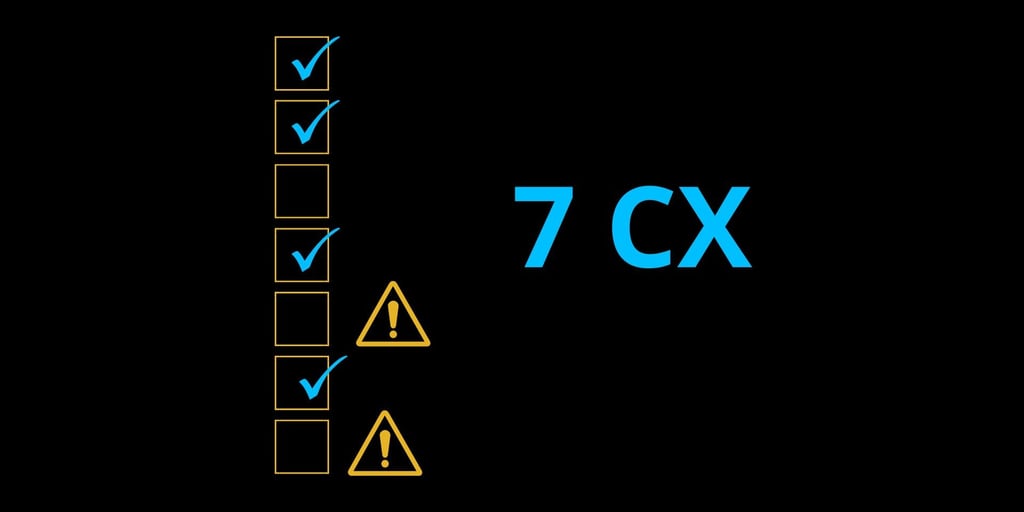
Most CX leaders can tell a great story on day one.
The problem is day 90!
The ideas are still good. The decks still make sense. But execution has slowed to a crawl. The organization is polite, supportive, and quietly doing other things.
Here are seven quiet killers of CX execution, and how to disarm each one.
1. CX is positioned as a project, not a system
If CX shows up as a “program,” it will compete with every other initiative.
Fix: Anchor CX in your operating rhythm, not in a slide. Make sure there is:
A monthly CX review
CX outcomes in the business scorecard
Clear owners for each pillar
2. No executive sponsor with real power
If CX has enthusiasm but no power, it will die the first time cuts hit.
Fix: Secure a sponsor who owns real P&L, not just “experience.” Give them a simple, quarterly CX objective tied directly to revenue, retention, or risk.
3. Too many metrics, not enough meaning
Drowning leaders in 40 scores is a great way to get them to ignore all of them.
Fix: Force a shortlist:
One primary experience outcome
Two to four supporting metrics
A small set of leading indicators
Simplify until executives can recite the metrics from memory.
4. CX work is detached from line managers
If front line leaders only hear about CX in emails, nothing will change.
Fix:
Put CX goals into team leader scorecards
Give them simple playbooks for coaching, feedback, and recovery
Recognize managers visibly when they move CX metrics
Execution follows accountability.
5. Projects are scoped too big
“Journey transformation” sounds exciting and impossible.
Fix:
Break work into 90 day missions with clear start and end points
Solve one friction at a time in one part of the journey
Celebrate visible wins and share them across teams
Momentum is more important than perfection.
6. No single source of truth for customer signals
If there are five versions of customer reality, politics wins.
Fix:
Create a single CX signal hub
Pull in reviews, surveys, operational data, and complaints
Standardize tags and taxonomy so themes show up clearly
Use this hub in every CX meeting
Your system should argue with reality, not with other reports.
7. CX is treated as a cost, not a growth lever
If finance sees CX as a “nice to have,” you will lose budget every time.
Fix:
Tie CX stories to hard outcomes
Show retention lift, cost to serve reductions, average order value changes
Use before and after examples for specific initiatives
Once CX is seen as a revenue and risk lever, it stops being optional.
You do not have to fix all seven at once.
Pick the one that is hurting you most, and design a specific counter move. Over time, you will build something most organizations never have: a CX program that actually survives contact with real life.
If you want a fast reality check on which of these seven are hurting you most, run your team through the CXWolf Experience Leadership Diagnostic and compare your scores pillar by pillar.


A complete customer experience operating system built for operators and executives who want CX to drive revenue, retention, reputation, and risk.
© 2025 CXWolf. All rights reserved.
Platform
Resources
Customer Led Growth
Stay Ahead of CX
Get one concise briefing per week with practical CX insights.